
TL;DR:
The best christmas tree decorations combine a clear colour palette, layered lighting, and decorations added in the right order: lights first, then ribbon, then large ornaments, then small ones. For 2026, UK trends favour jewel tones like burgundy and emerald, champagne gold, and textured, nature-inspired pieces over uniform baubles. A professionally styled tree typically costs £150 to £400 for a home, more for a full luxury or commercial install.
Most Christmas trees don’t fail because of a lack of decorations. They fail because of the order things went on, and because everything was bought to match nothing in particular.
A tree with fifteen mismatched ornaments and no ribbon looks sparse. A tree with eighty ornaments and no structure looks cluttered. The difference between a tree that looks like it belongs in a magazine and one that looks like a box was emptied onto it usually comes down to three things: palette, layering, and lighting depth.
This guide covers exactly how to get all three right for 2026, what’s trending across UK homes this year, what it costs if you’d rather have it done for you, and when that’s actually worth it.
What Makes Christmas Tree Decorations Look Professional, Not Cluttered
A professionally styled Christmas tree uses a limited colour palette of two to three shades, layers decorations from large to small working outward from the trunk, and builds lighting depth before anything else goes on. Everything after that, ribbon, ornaments, picks, is added to fill gaps rather than scattered evenly.
Most home trees go wrong in one of two ways. Either every bauble in the loft goes on regardless of colour, or lights get strung around the outside of the tree instead of woven through it, leaving the middle dark and flat.
Neither is really about how much was spent. A tree with £30 of decorations in one palette will always look more considered than one with £150 of decorations in five.
How to Decorate a Christmas Tree in the Right Order
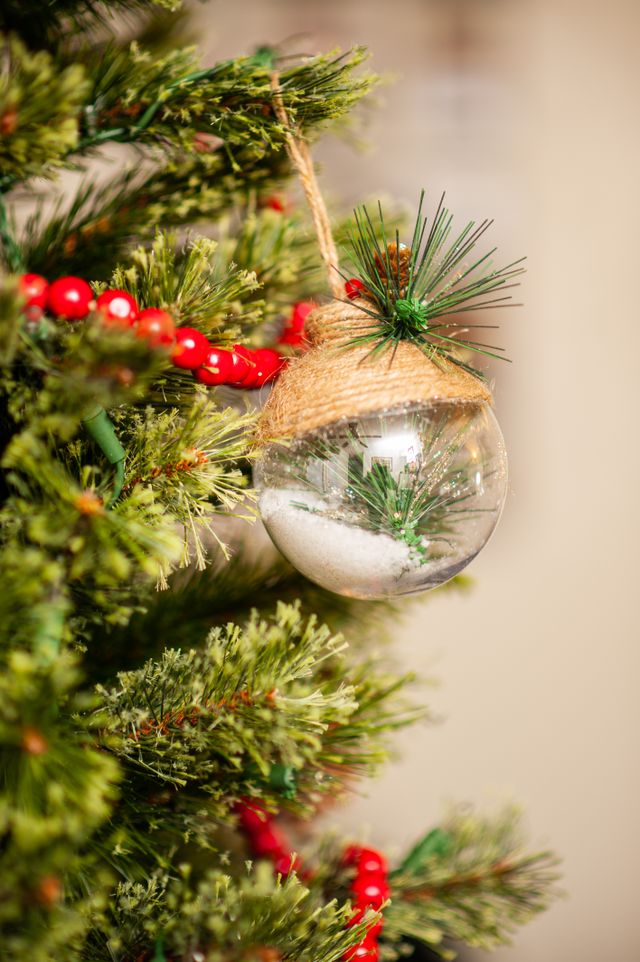
Christmas tree decorations should go on in this order: lights first, then ribbon or garland, then large ornaments, then medium ornaments, then small ornamants and picks, finishing with the topper. Doing it in any other order usually means redoing a step.
Trying to tuck ribbon behind ornaments that are already hung is the single most common reason a tree ends up being redecorated halfway through.
The order, step by step:
- Lights first, woven in rather than wrapped around. Start near the trunk and work outward along each branch, not just around the outside of the tree. This is what gives a tree depth and glow from the inside, rather than looking lit only on the surface. For a 6 to 7ft tree, 600 to 800 warm white LEDs gives good coverage without looking sparse.
- Ribbon or garland next, before any ornaments go on. Wired ribbon holds its shape better than unwired and is easier to reshape after guests brush past it. Cascading it in loose diagonal lines from top to bottom, rather than wrapping it horizontally, is what reads as styled rather than store-bought.
- Large ornaments, placed deep in the branches near the trunk. These anchor the design and add visual weight low down, where a tree needs it most.
- Medium ornaments, spread more evenly through the mid-branches. This is where most of the colour and pattern of the palette shows.
- Small ornaments and picks, placed at the branch tips. Picks, sprigs, and smaller accent pieces fill gaps and catch light at the very edges of the tree, which is where the eye naturally goes first.
- Topper last. A star, bow, or spray, whatever suits the palette, always goes on once everything else is settled, so its scale can be judged against the finished tree rather than an empty one.
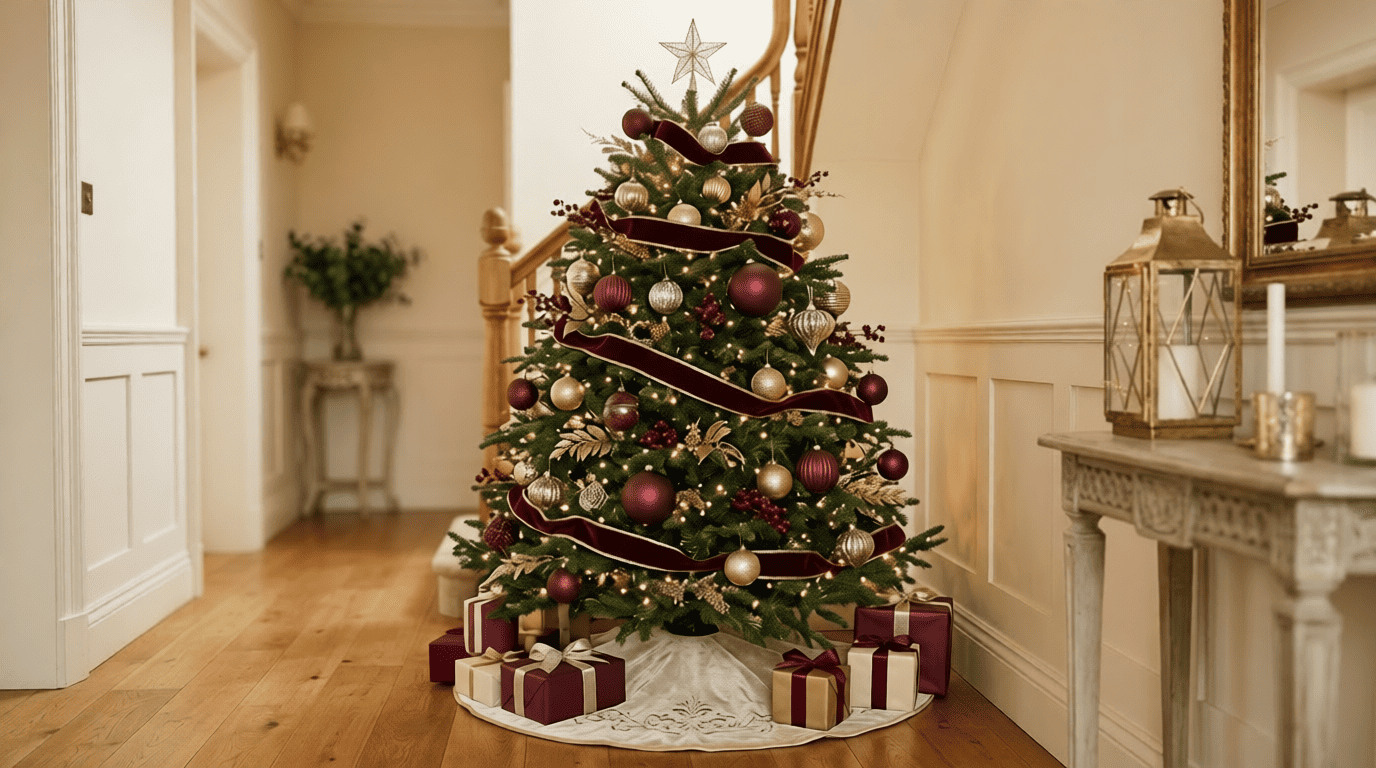
A tree skirt at the base finishes the look and covers the stand, cables, and any bare pot underneath, small detail, but it’s usually the last thing that makes a tree look “done” rather than “decorated.”
2026 Christmas Tree Colour Trends in the UK
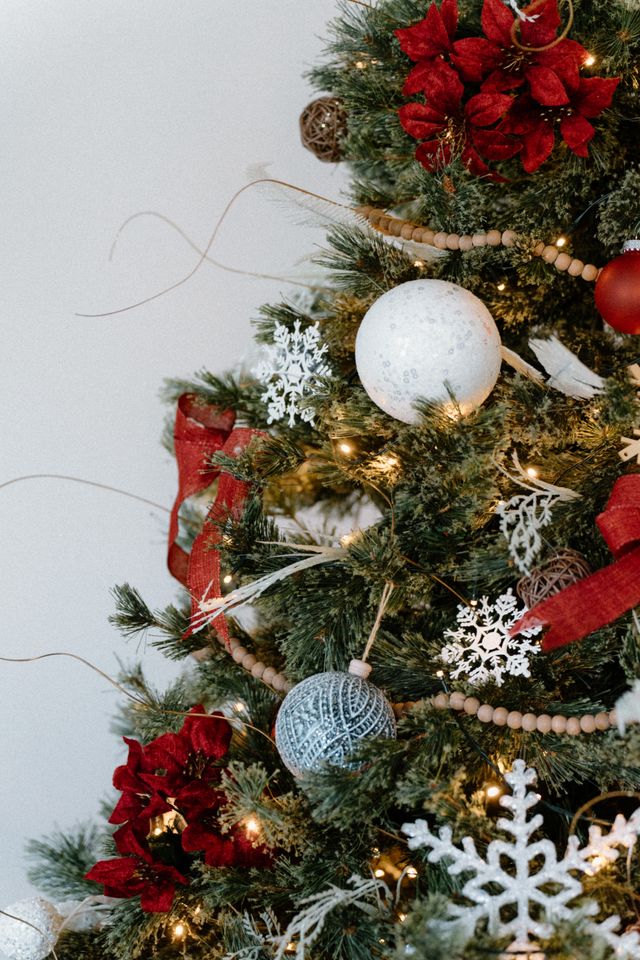
The standout Christmas tree colour trends for 2026 in the UK are jewel tones like burgundy and emerald paired with warm gold, champagne and rose gold for a softer glamorous look, and frosty white, blue and silver for a cooler fairytale palette. Nature-inspired trees using wood, pinecones and muted earth tones are also trending strongly this year.
Nobody needs to follow a single palette exactly. But picking one before buying anything is what stops a tree looking like a mismatched box of decorations from three different Christmases.
The five palettes shaping trees this year:
- Burgundy and gold. Deep wine-red baubles, aged metallic accents, velvet ribbon. Reads as warm, traditional, slightly formal. Works especially well against a real green fir.
- Emerald and champagne. A softer, more contemporary take on classic red-and-green. Champagne gold picks and matte emerald baubles give a look that photographs well without being loud.
- Frosty blue, white and silver. Icy tones for a cooler, more fairytale feel. Works particularly well with a flocked or frosted artificial tree and cool white lighting rather than warm.
- Black and monochrome. The boldest of this year’s trends, black or near-black trees paired with gold or silver accents for a dramatic, statement look. Best suited to a single feature tree rather than a family living room centrepiece.
- Nature-inspired and textured. Raw wood, woven raffia, dried orange slices, pinecones and muted browns and creams. A move away from shiny plastic finishes towards decorations with visible texture.
Palettes with genuine sentimental value, family colours, decorations passed down, a couple’s wedding colours, will always outlast a passing trend on a tree that matters to the household. The best-looking trees usually mix one current trend with something personal, rather than following either alone.
For homes going all-in on a coordinated festive colour scheme this year, the same palette often carries through into wider party styling too, something we cover in more depth in our guide to Christmas party decoration ideas in Bristol.

Luxury Touches That Separate a Styled Tree From a Decorated One
The details that make a Christmas tree look luxury rather than simply decorated are layered ribbon in varying widths and textures, oversized statement pieces placed deliberately rather than evenly, and lighting with visible depth rather than a single string wrapped around the outside.
None of these cost much more than the basics. They just take more thought about placement.
Ribbon layering. One width and texture of ribbon reads as an afterthought. Two or three, a wide velvet paired with a narrower metallic thread, for instance, cascading through the branches at different depths, is what creates the layered look seen in styled trees. Wired ribbon holds loops and shape far better than unwired, especially once a tree has been brushed past a few times.
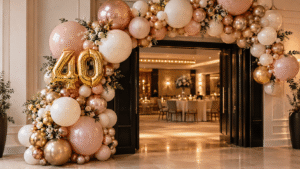
Oversized, asymmetric pieces. Rather than uniform baubles spaced evenly, 2026’s styled look uses a small number of larger statement pieces, an oversized bauble, a substantial foliage pick, a single large bow, placed with intention rather than symmetry. This mirrors the same shift happening in event styling more broadly, where organic, asymmetric balloon garlands have overtaken uniform, evenly-spaced designs as the preferred look for parties and installations this year. The same principle, deliberate irregularity over uniform repetition, applies just as well to a tree.
Lighting depth. Warm white LEDs woven from the trunk outward, rather than wrapped around the surface, are what give a tree glow from within rather than just around its edges. A second, shorter string focused purely on the inner branches adds noticeable depth for relatively little extra cost.
A finished base. A tree skirt, or for a more contemporary look, a wrapped or dressed pot, covers the stand and cables and genuinely changes how finished the whole tree looks, disproportionate to how small a detail it is.
Real vs Artificial: What Affects How Your Decorations Sit
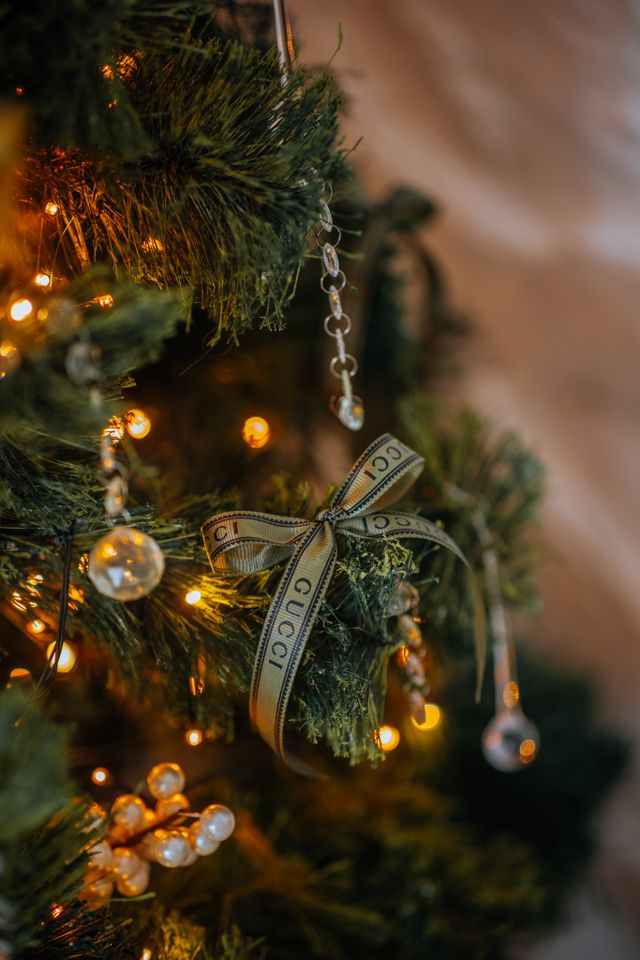
A real tree has irregular branch spacing and natural gaps, which suits a fuller, more organic decorating style with picks and foliage tucked into the sparser areas. An artificial tree has evenly spaced, denser branches, which holds ornament weight more predictably and suits a neater, more symmetrical layered look.
Neither is more “correct” for a luxury finish. They just behave differently under the same decorations.
Real trees:
- Branches thin out naturally towards the top and have visible gaps lower down, useful for tucking in picks and smaller accent pieces rather than a flaw to fight against
- Needle drop over the weeks leading up to Christmas means heavier ornaments are best kept off the outermost branch tips
- Natural pine scent and texture add to the nature-inspired trend without any extra styling needed
Artificial trees:
- Even branch spacing supports symmetrical ribbon and ornament placement more easily than a real tree does
- Pre-lit options save the most time-consuming step, though mixing in a second string of lights still helps add depth rather than relying on pre-lit coverage alone
- Denser foliage holds heavier statement pieces and oversized ornaments without sagging, useful for the oversized, asymmetric look trending this year
Whichever is chosen, the same order and layering principles apply. The main adjustment is how much filler, picks, foliage sprigs, extra ribbon, is needed to compensate for a real tree’s natural gaps.
How Much Do Christmas Tree Decorations Cost in the UK?
Christmas tree decorations in the UK typically cost £30 to £80 for a budget set, £100 to £250 for a mid-range coordinated palette, and £300 to £600 or more for a full luxury set with layered ribbon, statement pieces and premium lighting. Having a tree professionally styled by a decorator usually adds £150 to £400 on top of decoration costs, depending on tree size and design complexity.
Prices vary a lot depending on whether decorations are bought new each year or built up over several seasons, and how large the tree is.
A realistic breakdown for a 6 to 7ft tree:
Budget (£30–£80)
- Single string or two of budget LED lights
- One pack of mixed baubles in a coordinated colour
- Basic ribbon, one width and texture
Mid-range (£100–£250)
- Two to three strings of good quality warm white LEDs
- Baubles across two or three sizes in a chosen palette
- Two ribbon textures, plus a handful of picks or sprigs
- A simple topper
Luxury (£300–£600+)
- Premium LED lighting woven for depth, sometimes two separate strings
- Curated ornament sets in varying sizes and finishes, matte, gloss and metallic mixed
- Layered ribbon in multiple widths and materials
- Statement picks, oversized pieces, and a coordinated topper
- Tree skirt or dressed base
Professional styling on top of decorations
Having a tree decorated professionally, rather than just buying the decorations, typically costs £150 to £400 for a home tree, depending on size and design complexity. Commercial trees, for offices, hotel lobbies or retail spaces, generally start from £300 and scale with height and the amount of bespoke branding or design work involved.
This is usually a separate cost to the decorations themselves, since many decorators either bring curated stock as part of the package or style decorations already owned by the household or business.
When It’s Worth Hiring a Professional to Decorate Your Tree
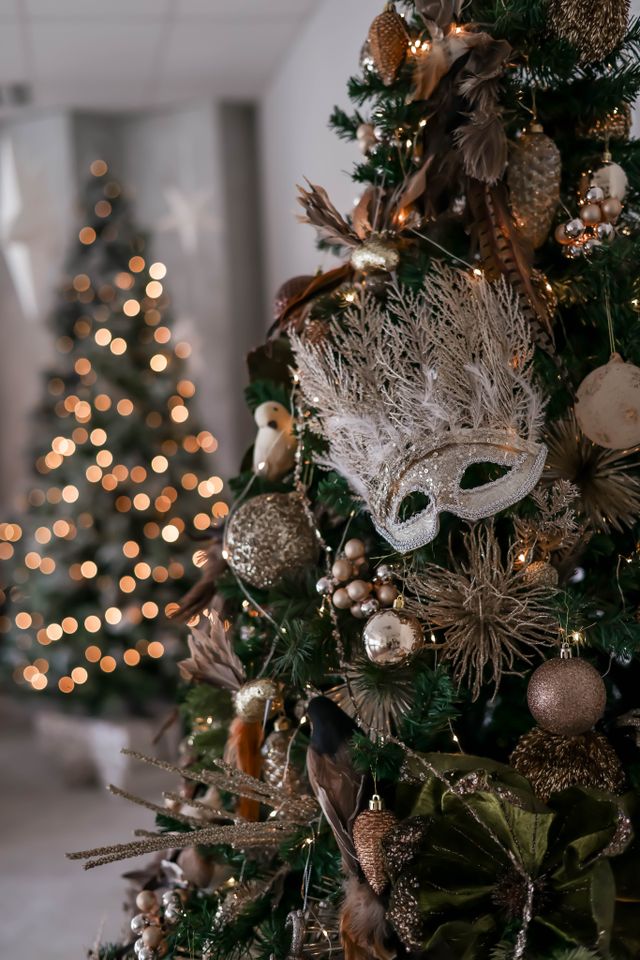
Hiring a professional to decorate a Christmas tree is worth it when the tree is a genuine focal point, an entrance hall, a large open-plan living space, a commercial lobby or office, where the finished look needs to be consistent, photograph-ready and installed without the household or business spending several hours on it themselves.
It’s less necessary for a smaller family tree tucked in a living room corner, where the process itself is often part of the tradition.
Where professional styling makes the most difference:
- Large or tall trees. Anything above 7ft becomes genuinely difficult to decorate evenly without a ladder and a second pair of hands, and gaps or bare patches are far more visible at height.
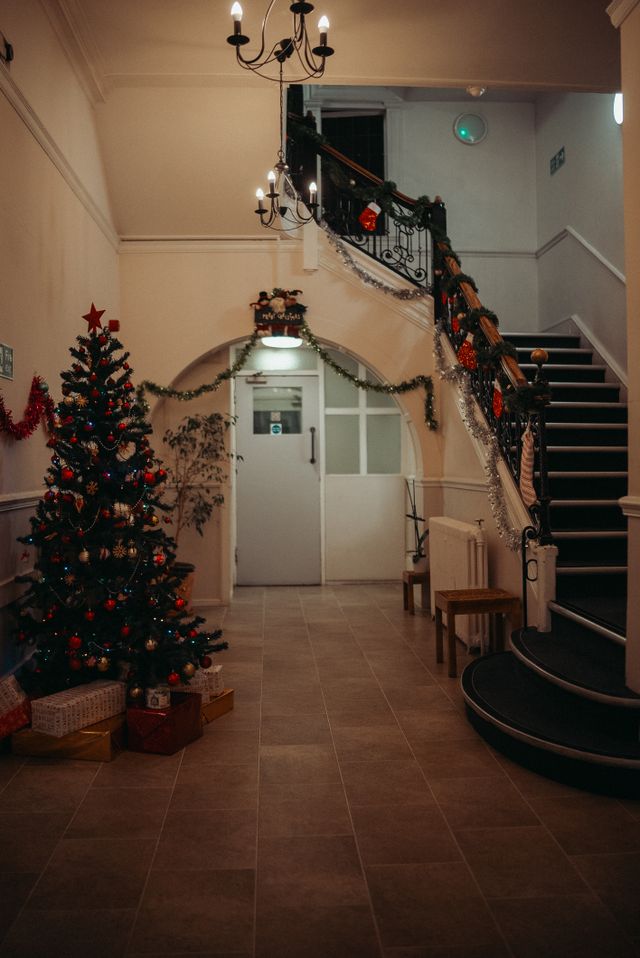
- Statement entrance or hallway trees. The first thing guests or clients see benefits from the same layered, deliberate placement used in event styling, rather than an evenly-spread approach.
- Commercial and office trees. Hotel lobbies, reception areas and retail spaces need a tree that looks finished and on-brand for weeks without maintenance, not one decorated once by whoever had ten minutes free. This crosses into the same territory as full commercial Christmas decorations, where trees are usually one part of a wider festive install.
- Milestone or hosted Christmas events. A tree styled to match the wider room, backdrop, garlands and lighting used elsewhere in the space reads as one cohesive look rather than separate decorations bolted together, the same principle covered in our Christmas party decoration ideas guide for Bristol.
In my years styling Christmas installs across Bristol, the trees that get complimented the most are rarely the ones with the most decorations on them. They’re the ones where the palette was decided first and everything else followed from that.
For homes wanting a tree that matches the rest of a styled room, whether that’s coordinated with other festive decor or part of a wider luxury interior look, professional tree styling is usually offered as part of a broader luxury room decor package rather than as a standalone service, since the palette and placement work best when planned alongside the rest of the space.
Frequently Asked Questions About Christmas Tree Decorations
Ready to Book Your Christmas Tree Styling in Bristol?
Whether it’s a statement entrance tree, a commercial lobby install, or a home tree that needs to match the rest of a styled space, Ignition Signature Events brings the same layered, considered approach used across our Bristol and Gloucester event styling to Christmas trees too. Get in touch on 07472 995945 to talk through your palette, tree size and timeline, or take a look at our luxury room decor and commercial Christmas decorations pages for more on what’s included.